Your home’s electrical system works every day to power your lighting, appliances, heating and cooling equipment, electronics, and other essential devices. However, many homeowners do not think about their electrical system until a breaker starts tripping, an outlet stops working, or another problem appears.
The right home electrical system upgrades can improve safety, increase convenience, reduce energy waste, and prepare your home for future technology. Whether you live in an older house or a newer home, making smart electrical improvements can also add long-term value to your property.
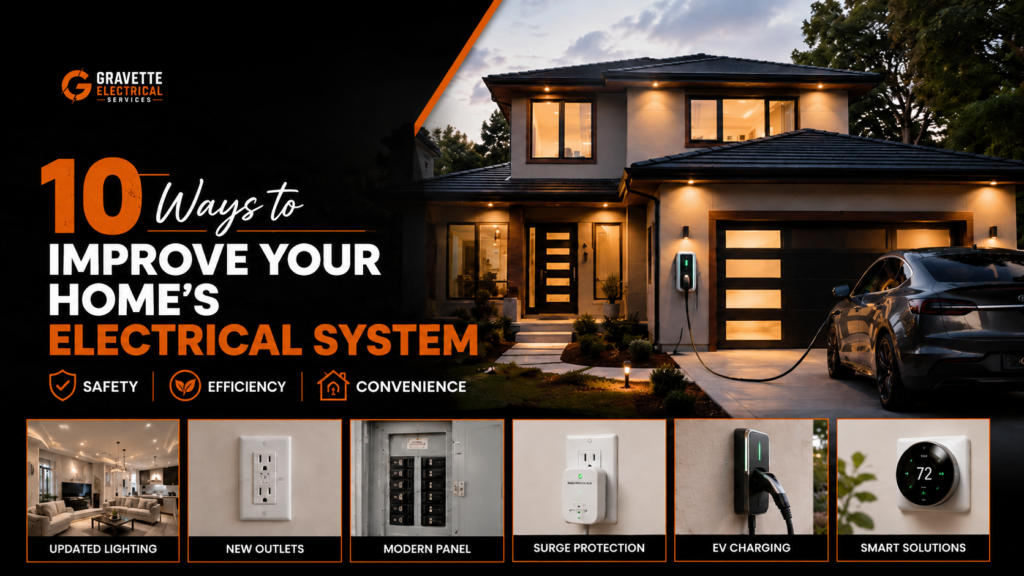
Here are 10 practical ways to improve your home’s electrical system.
1. Upgrade an Outdated Electrical Panel
Your electrical panel is the heart of your home’s electrical system. It distributes electricity throughout the house and protects individual circuits with breakers.
Older electrical panels may not provide enough capacity for the demands of a modern household. This can become especially noticeable if you are adding:
- Electric vehicle charging
- New HVAC equipment
- Electric appliances
- Workshop equipment
- Home office technology
- Additional lighting
- Major home renovations
If your existing panel is running out of breaker space, frequently trips, or cannot support planned upgrades, it may be time to have it professionally evaluated.
For many homes, upgrading to a properly sized modern electrical panel provides additional capacity while preparing the property for future electrical needs.
2. Install Whole-Home Surge Protection
Power surges can affect much more than computers and televisions. Modern homes contain electronic components in refrigerators, washing machines, HVAC systems, smart appliances, entertainment equipment, and other devices.
A whole-home surge protection device is typically installed at the electrical panel. It provides an added layer of protection against voltage spikes that may be caused by utility disturbances, nearby lightning events, or equipment cycling within the home.
While no surge protection system can prevent every possible electrical event, whole-home surge protection can help reduce the risk of expensive damage to sensitive electronics.
3. Replace Worn or Damaged Outlets
An outlet that feels loose or no longer holds a plug securely should not be ignored.
Other warning signs include:
- Cracked or broken outlet covers
- Discoloration around the receptacle
- Buzzing or crackling sounds
- Outlets that feel unusually warm
- Plugs that repeatedly fall out
- Intermittent power
Replacing damaged or worn receptacles can improve both electrical safety and everyday reliability.
It can also be a good opportunity to update older outlets and give rooms a cleaner, more finished appearance.
4. Add GFCI Protection Where Needed
Ground Fault Circuit Interrupter, or GFCI, protection is designed to reduce the risk of electrical shock by quickly interrupting power when a dangerous ground fault is detected.
GFCI protection is especially important in areas where electricity may be used near water or damp conditions, such as:
- Kitchens
- Bathrooms
- Garages
- Laundry areas
- Basements
- Outdoor locations
Older homes may not have the same level of GFCI protection commonly found in modern electrical installations.
If you are unsure whether your home has adequate GFCI protection, a licensed electrician can inspect the system and recommend appropriate improvements.
5. Consider AFCI Protection
Arc Fault Circuit Interrupters, or AFCIs, are designed to detect certain dangerous electrical arcing conditions that conventional breakers may not detect.
Electrical arcing can result from problems such as damaged wiring, deteriorated cords, or loose electrical connections.
Adding appropriate AFCI protection can provide another layer of protection against electrical fires.
Because electrical requirements can vary depending on the installation, location, and work being performed, an electrician can determine where AFCI protection is appropriate for your home.
6. Upgrade Your Home Lighting
Lighting upgrades are one of the easiest ways to improve both the appearance and efficiency of a home.
Modern LED lighting typically uses less electricity and lasts longer than traditional incandescent lighting. It can also improve visibility and make rooms feel brighter and more comfortable.
Popular lighting upgrades include:
- Recessed lighting
- Under-cabinet lighting
- Kitchen lighting
- Bathroom lighting
- Garage lighting
- Exterior security lighting
- Landscape lighting
- Dimmer switches
A well-designed lighting plan can improve functionality while highlighting important areas of your home.
If you are already remodeling a kitchen, bathroom, basement, or living space, it is often a good time to update the lighting as well.
7. Install Dedicated Circuits for High-Demand Equipment
Some appliances and equipment require significant electrical power. Connecting too many devices to the same circuit can lead to nuisance breaker trips and overloaded circuits.
A dedicated circuit provides power to a specific appliance or piece of equipment rather than sharing the circuit with several other devices.
Equipment that may benefit from or require dedicated electrical circuits can include:
- Refrigerators
- Microwaves
- Electric fireplaces
- Garage freezers
- Workshop equipment
- Home office equipment
- HVAC components
- Large appliances
A licensed electrician can evaluate the electrical requirements of your equipment and determine the correct circuit size and protection.
8. Add More Electrical Outlets
Extension cords and power strips can be useful temporarily, but relying on them throughout the house may be a sign that you do not have enough permanent receptacles.
Adding outlets can make your home more convenient and reduce the need to run cords across rooms.
Consider adding receptacles near:
- Beds and nightstands
- Desks and home offices
- Entertainment centers
- Kitchen work areas
- Garage workbenches
- Basement living spaces
- Outdoor entertaining areas
You may also want to consider receptacles with built-in USB or USB-C charging where appropriate.
Adding outlets is one of the most practical home electrical system upgrades for households with multiple phones, computers, televisions, smart devices, and other electronics.
9. Prepare Your Home for an Electric Vehicle Charger
Electric vehicles are becoming an increasingly important consideration for residential electrical systems.
Even if you do not currently own an EV, preparing your garage or parking area for future Level 2 charging may save additional electrical work later.
EV charger preparation may involve:
- Evaluating electrical panel capacity
- Installing an appropriately sized circuit
- Running wiring to the garage or parking location
- Installing the required receptacle or hardwired connection
- Planning for future charging equipment
If you are already upgrading your electrical panel or renovating your garage, preparing for EV charging at the same time can be especially convenient.
An electrician can evaluate your existing electrical service and determine what is required before installing charging equipment.
10. Schedule a Professional Electrical Inspection
Not every electrical problem is visible.
Loose connections, aging wiring, improper grounding, overloaded circuits, damaged components, or previous electrical work may remain hidden until they begin causing noticeable problems.
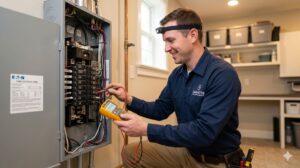
A professional electrical inspection can help identify potential concerns before they become larger and more expensive issues.
An inspection may be especially valuable when:
- Purchasing an older home
- Planning a major renovation
- Adding large electrical loads
- Experiencing frequent breaker trips
- Noticing flickering lights
- Finding warm or damaged outlets
- Preparing to sell a home
- You are unsure when the system was last inspected
Knowing the condition of your electrical system makes it easier to prioritize improvements and plan future upgrades.
Why Home Electrical System Upgrades Matter
Electrical improvements are about more than adding new outlets or replacing old fixtures. A properly maintained and updated electrical system can make your home safer, more convenient, and better prepared for modern technology.
Depending on your home, the most valuable improvements may include upgrading an electrical panel, adding surge protection, improving GFCI or AFCI protection, installing new lighting, adding dedicated circuits, or preparing for an EV charger.
The right upgrades depend on your existing electrical system, your household’s power demands, and your future plans.
Frequently Asked Questions
How do I know if my electrical panel needs to be upgraded?
Warning signs can include frequent breaker trips, limited breaker space, an older electrical service, or plans to add major electrical equipment. An electrician can evaluate your panel and calculate whether your existing electrical service can handle your current and future electrical needs.
Is whole-home surge protection worth installing?
For many homeowners, it can be a valuable addition. Modern homes contain many appliances and devices with sensitive electronic components. Whole-home surge protection provides an additional layer of protection against damaging voltage spikes.
Should I replace an outlet that does not hold plugs tightly?
Yes. An outlet that no longer holds a plug securely may be worn and should be evaluated. Damaged, cracked, discolored, buzzing, or unusually warm outlets should also be inspected by a qualified electrician.
Can I install more outlets instead of using extension cords?
In many situations, installing properly located permanent receptacles is a safer and more convenient long-term solution than depending on extension cords or multiple power strips.
Can an electrician prepare my home for a future EV charger?
Yes. An electrician can evaluate your electrical panel, available capacity, wiring route, and charging requirements. Even if you do not purchase the charger immediately, preparing the electrical infrastructure during another project may make a future installation easier.
Improve Your Home’s Electrical System With Gravette Electrical Services
Your electrical system plays an important role in your home’s safety, comfort, convenience, and reliability.
Whether you are purchasing an older home, planning a renovation, adding new appliances, preparing for an electric vehicle, or simply looking for ways to improve your property, professional home electrical system upgrades can make a meaningful difference.
At Gravette Electrical Services, we help homeowners make smart electrical improvements based on the needs of their homes. Our electrical services include panel upgrades, surge protection, lighting installations, additional circuits and outlets, EV charger preparation, and other residential electrical work.
Ready to improve your home’s electrical system?
Contact Gravette Electrical Services today to schedule an estimate. We can evaluate your current electrical system and help you determine which upgrades make the most sense for your home, priorities, and budget.